Eating habits
Before we think about making any changes to our eating habits, it’s helpful to know what they are. If you’ve been able to keep a record of what you eat and drink, there are several things you may now be aware of.
There are lots of reasons why we have our current eating habits, but have you ever considered how these habits contribute to your health?
Take a moment now to reflect on this.
When you eat
- Skipping meals can contribute to low energy levels and lead to eating more than you mean to
- Lack of routine may result in high calorie cravings due to the body’s urgent need for energy
- We may become focussed on food, overeat or binge eat, often later in the day
What you eat
- We’re often told what we can’t eat and drink to manage our weight… it can be very confusing!
- It can be helpful to think about foods to add in that give us the nutrients we need, instead of cutting foods out
- We need variety from the five different food groups to get all the nutrients our bodies need
Eatwell Guide
Below you will find the five food groups and guidelines for general healthy eating. The proportions for each group will differ for those who are managing their weight. We will discuss more about this later in the session.
Use the Eatwell Guide to help you get a balance of healthier and more sustainable food. It shows how much of what you eat overall should come from each food group. The interactive version of the Eatwell Guide can help to illustrate this.
The proportions for each group will differ for those who are managing their weight. We will discuss this more later.
Food groups
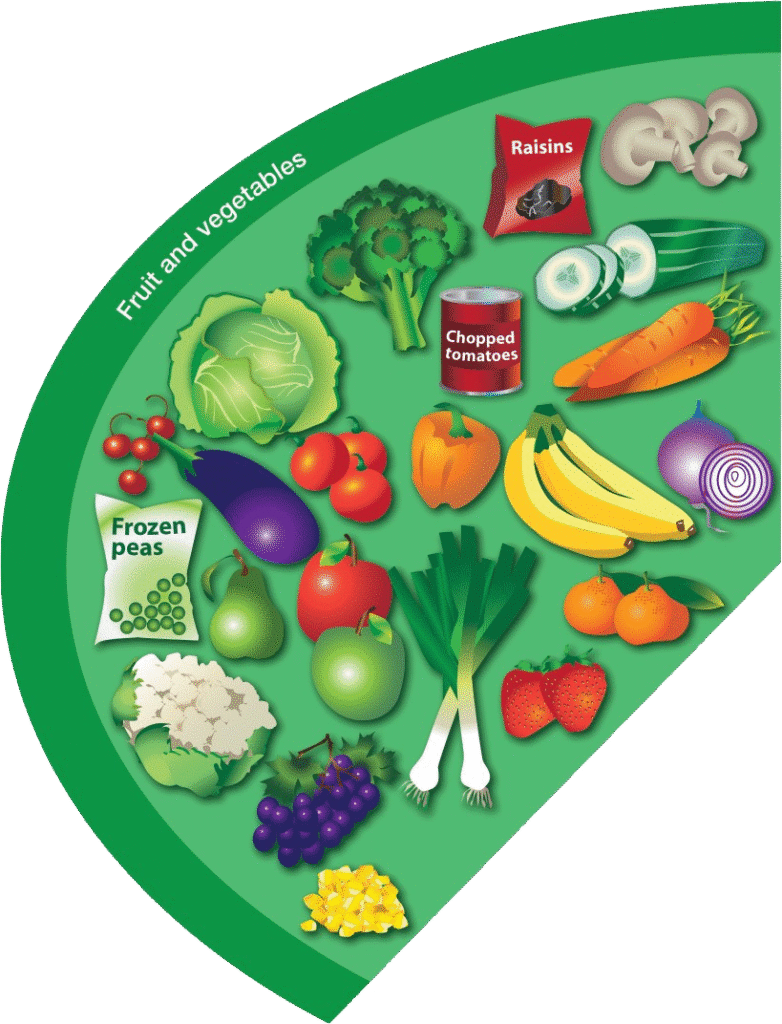
1. Fruit and vegetables
Why do we need food from this food group?
- They are high in fibre so increase feelings of fullness and tend to be lower in calories
- Fruit and vegetables contain vitamins, minerals, and antioxidants that help protect our cells from damage
- Evidence shows that diets higher in fruit and vegetables reduce our risk of developing health conditions, like some cancers, heart disease and type 2 diabetes
We should aim to have at least 5 different fruits and vegetables every day – tinned, fresh, frozen or dried. The more colours the better! Fruit and vegetables are good sources of fibre, and we know they’re associated with good health. Potatoes and sweet potatoes are exceptions to this group as they have a higher starch content, so they fall into the carbohydrate food group.
We can be tempted to increase our fruit intake by drinking shop bought smoothies. These can be higher in sugar and lower in fibre and should be limited to 150mls. A better idea might be to make your own smoothies, so you know exactly how many portions of fruit or veg are going into the blender.
Here’s some tips:
- Fill at least one-third of your blender with vegetables, such as carrots, peppers, cucumbers, greens and celery
- Add unsweetened fresh, canned, or frozen fruit – oranges, bananas, berries, mangoes, peaches – to add natural sweetness and nutrients
- Add milk or yoghurt to increase protein, as well as calcium and vitamin D
2. Carbohydrate
Why do we need food from this food group?
- Carbohydrates are the preferred fuel source for our cells. They keep us going!
- These foods also contain fibre, which is fantastic for keeping us feeling full as well as for good bowel health
- Choosing higher fibre varieties slows down our digestion, keeping our blood sugar levels – and therefore our energy – stable throughout the day
There are three main types of carbohydrates found in foods:
- Starches (also known as complex carbohydrates)
- Fibre (also a complex carbohydrate)
- Sugars (also known as simple carbohydrates)
Carbohydrate is the most readily available source of fuel which our body needs for pretty much everything:
- Digestion
- Temperature control
- Breathing
- Moving about
- Daily activities
- Walking and exercise
Whenever possible, choose higher fibre carbohydrates.
Fibre is the largely undigested part of the food. Fibre helps provide a feeling of fullness. This is because it passes through our digestive system more slowly than lower fibre foods.
Fibre helps reduce our risk of some diseases, including:
- bowel cancer
- heart disease
- stroke
- Type 2 diabetes
It also aids in the prevention of constipation.
Typically, people consume less fibre than is recommended. Studies show that on average people consume 18g of fibre per day. This is much less than the recommended 30g per day.
It is important to remember to:
- increase the amount of fibre in your diet gradually
- drink 8 to 10 cups of fluid daily, to keep your bowels moving
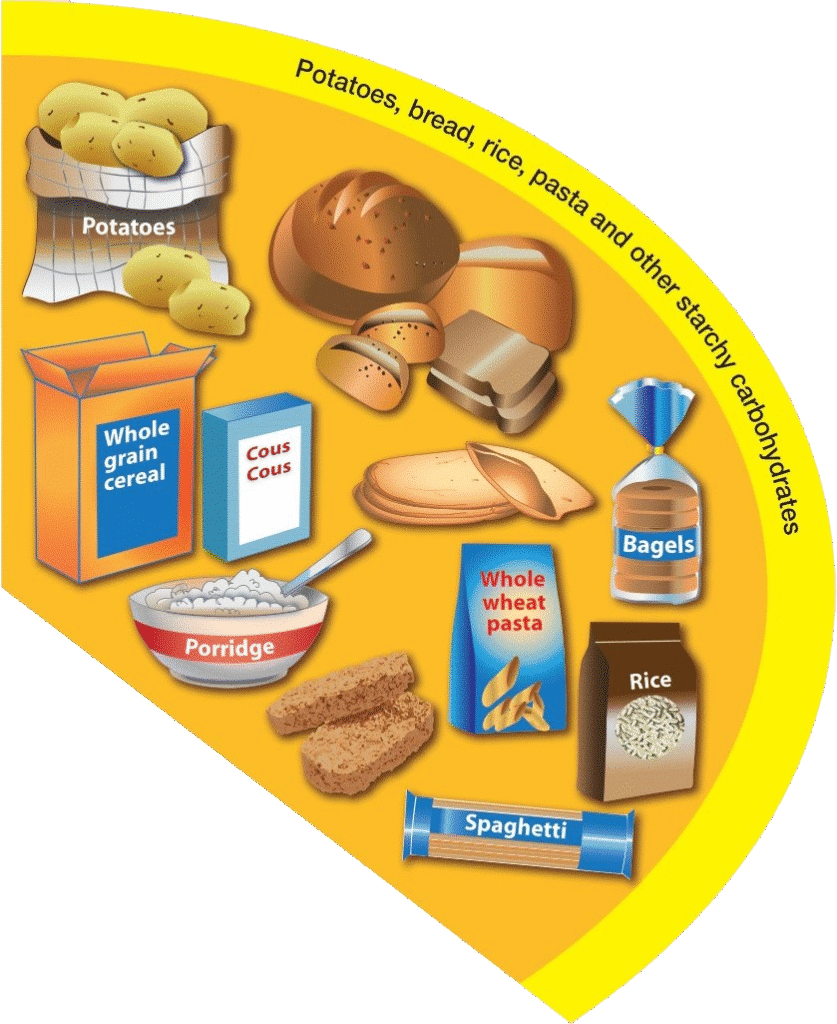
Examples of high fibre carbohydrate foods include:
- wholegrain cereals
- wholegrain and seeded bread
- brown rice
- wholegrain pasta
- baked potatoes with their skins on
Other higher fibre foods include:
- pulses
- beans
- lentils
- oats
- fruit and vegetables with skin left on (put down the peeler!)
3. Proteins
Why do we need food from this food group?
- Protein is the building blocks of our muscles and immune system
- Similar to fibre, protein helps keep us fuller for longer as it is digested slowly
- Protein containing foods like lean beef, pork and lentils also contain iron. Iron is important to prevent anaemia which can leave us feeling tired.
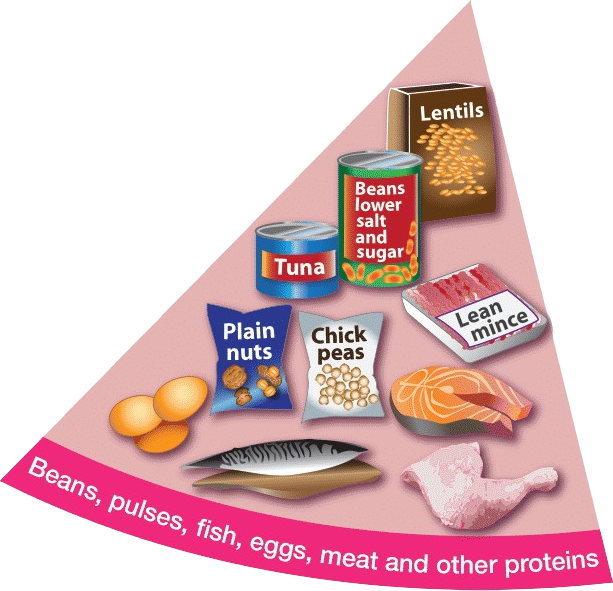
Aim to include a source of protein with every meal. You may want to consider:
- chicken
- meat
- fish
- pulses
- eggs
- nuts
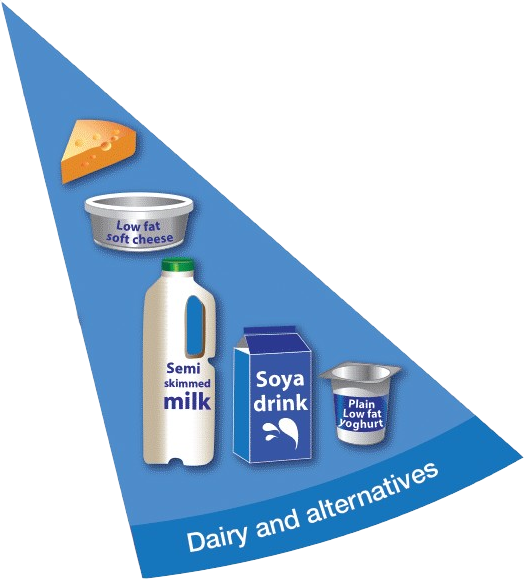
4. Dairy and alternatives
Why do we need food from this food group?
- Dairy products are high in calcium, which is important for our bones and teeth
- Some dairy products contain vitamin D, which is important for the functioning of our immune system
- These products also contain protein, which as we saw above is important for growth, repair, our muscles, and can help us feel fuller for longer
Examples of dairy foods include:
- milk
- yoghurt
- skyr
- cheeses like cheddar, edam, cottage cheese or quark
All types of cow milk (skimmed, semi skimmed and full cream) contain similar amounts of calcium. Some people may have tried high protein milks which can be helpful, however make sure you check the total calories per serving as some can be high.
Plant based milks such as soya, oat, or nut based have a lower calcium content so try to choose a fortified version. These milks can often be sweetened with added sugar, so make sure to choose the unsweetened variety. You may also need to consider calcium fortified cereals or make sure to include other calcium rich vegetables such as kale, broccoli or spinach in your diet.
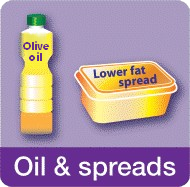
5. Fats and oils
Why do we need these food groups?
- These foods contain, and help us absorb the fat-soluble vitamins A, D, E and K
- These are important for our bones, sight, and immune system
- Eating some fat is important for our nerves, hormones and brain function
- Including some fat in our diet is also important for the feeling of fullness and satisfaction with a meal
A balanced diet should include some fat. However, too much can have a negative effect on health. It can increase the risk of heart disease and lead to weight gain because fats are energy dense. This means that you get a lot of energy from a small amount.
There are three main types of fat that we get in our diet.
Trans-fat
These are artificially produced via a process called hydrogenation. This process turns vegetable oils into solid fat.
Trans-fats are often found in processed, mass produced foods like stackable crisps, pies and some margarines. Spot these on ingredient labels by looking for the word “hydrogenated.”
These fats are known to be unhealthy and can raise cholesterol levels in blood which can increase the risk of heart disease and other health issues. Avoid where possible.
Saturated fat
This type of fat mainly comes from animal sources such as butter and and the fat on meat. This type of fat can raise our blood cholesterol levels which can put us at risk of heart disease.
Research shows that most people in the UK eat too much saturated fat, so it can be a good idea to reduce our intake by replacing them with sources of unsaturated fat.
Unsaturated fat
This is considered the healthiest type of fat.
Unsaturated fats can be found in vegetable products such as olive oil, rapeseed oil, sunflower oil, and oily fish which contain omega 3 fats which we know are great for our heart health.
Consider swapping butter for olive spread, cooking with olive oil, and including two portions of oily fish such as mackerel, salmon or sardines in your diet. Tinned tuna does not count.
How much fat should we be eating?
Guidelines suggest that we should be aiming for no more than 70g of total fat per day for an adult female, and 90g of total fat per day for an adult male.
The guideline for saturated fat is no more than 20g for women and 30g for men.
Foods high in fat and sugar
This group of foods can add extra fat, sugar and salt to your food intake. They don’t offer many nutrients, so it’s best to eat these in smaller amounts and less often.
These are foods we often snack on, like:
- chocolate
- cakes
- crisps
- full sugar drinks
We don’t need to avoid them completely, as snacking is a normal part of our eating pattern. However, understanding why we snack can sometimes be helpful – we’ll cover this in the next session.
If planned ahead, snacks can be an important part of your diet, providing an energy boost for activity or helping to tide you over until dinner. It’s important to think about what we’re snacking on, and we’ll talk about ideas in the programme.