
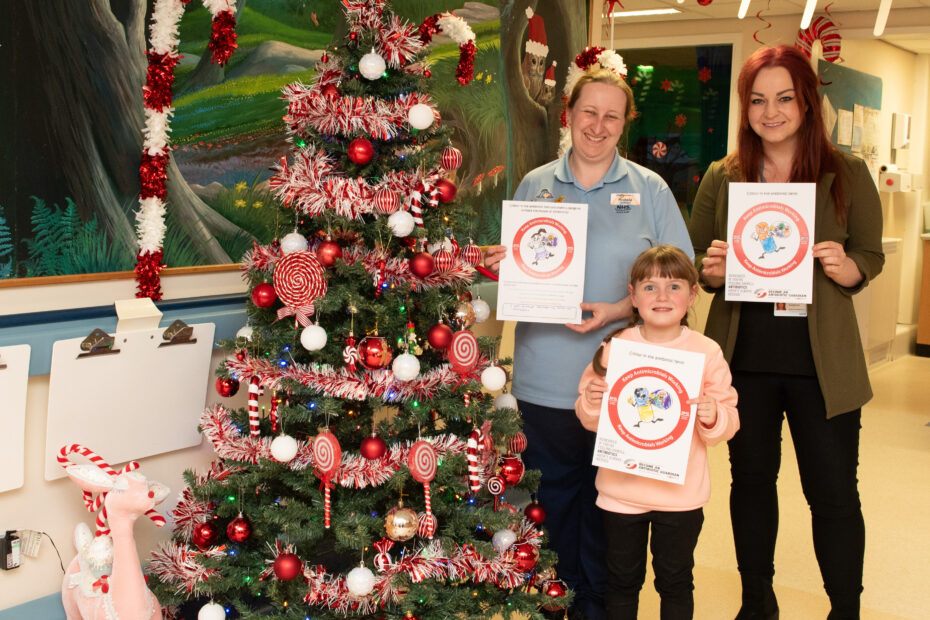
During November, children in University Hospital Crosshouse children’s wards took part in a colouring in competition as part of World Antimicrobial Resistance Awareness Week to help increase awareness of antimicrobial resistance and to make sure everyone plays their part in stopping the spread of drug-resistant infections.
The winners in each category were:
- 3-5 years – Darcie from Kilmarnock
- 6-9 years – Dylan from Ayr
- 10+ years – Anaya from Kilmarnock
Kayleigh Hamilton, Senior Antimicrobial Pharmacist for NHS Ayrshire & Arran said, “We want to congratulate our winners and thank all of the children who took part in colouring in our antibiotic hero and making their pledge to protect the future of antibiotics.
“We hold this competition each year, and the children enjoy being creative, while raising awareness and understanding of antimicrobial resistance. If antimicrobial medicines become ineffective, it becomes much more difficult to treat infections. This can mean longer hospital stays for patients and longer recovery times.”
The misuse and overuse of antimicrobials, such as taking antibiotics when they are not needed, can cause bacteria to become resistant. This is known as Antimicrobial Resistance (AMR) and happens when bacteria, viruses, fungi and parasites change over time and no longer respond to these medicines meaning current treatments will no longer work.
Kayleigh went on to add, “There are things you can do to help prevent antimicrobial resistance. By reducing the risk of infection through washing your hands, limiting close contact with those who are sick and keeping your vaccinations up to date. And it is important to remember, not all infections can be treated with antibiotics.”
You can also help by:
- Only taking antimicrobial medications that are prescribed to you. Do not share them with family or friends.
- Always finishing a prescribed course of antibiotics even if you already start to feel better.
- Return any old or unused antibiotics to your local pharmacy to be disposed of appropriately.
Residents in Ayrshire and Arran are also being encouraged to return old or unused antibiotics to their local community pharmacy to ensure safe disposal. Antibiotics should never be saved for later or shared with others. Contaminating the environment and water courses with antibiotic residues can also spread resistance genes among bacteria.