
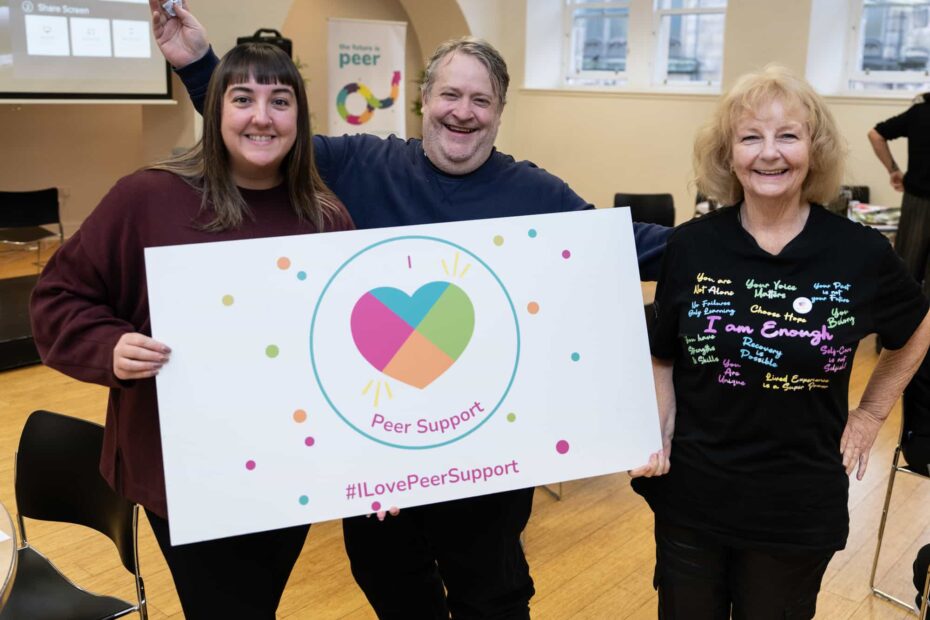
A three-year project will see Ayrshire take a new collaborative approach to growing mental health and suicide prevention peer support, expanding access in communities and clinical settings, developing peer worker roles across sectors, and putting lived experience leadership at the heart of local mental health systems.
One of two areas in Scotland, alongside North Lanarkshire, Scottish Recovery Network has chosen Ayrshire to establish a Growing Peer Support Collaborative. The collaborative will take a coordinated, recovery-focused approach to bringing together lived experience leaders, Health and Social Care Partnerships, NHS Boards, Third Sector Interfaces and third sector organisations with a view to developing more accessible support and better experiences for people engaging with mental health and suicide prevention services.
Peer support is an essential part of a recovery-focused mental health system. It’s a relational approach where people with shared lived experience support each other through challenging times, not as experts, but as equals. Across communities and services peer workers contribute in roles ranging from one-to-one support to senior leadership, recovery colleges or local or online groups. Peer workers show that recovery is possible and are evidence that things can get better. Though it may feel informal, it is grounded in peer values and a skilled workforce.
Scottish Recovery Network received 31 expressions of interest from organisations and services across the country. There was a considered selection process to identify the two project areas but the learning from the ground won’t just stay local. The project will capture what enables, and what holds back, the growth of peer support and a peer workforce in each area.
Learning will be shared across Scotland so that local approaches and lessons can inspire and inform change in other areas, and help inform how we achieve national policy goals and help the shift to prevention and early intervention as set out in Scottish Government and COSLA mental health, suicide prevention and health and social care renewal strategies.
Minister for Mental Wellbeing Maree Todd said:
“Peer support plays a vital role in improving people’s mental health and wellbeing and reflects the valuable contribution that shared lived experience can make to an individual’s recovery or the delivery of a service.
In partnership with the Scottish Recovery Network, we are continuing to grow Scotland’s peer workforce – to ensure it is more widely embedded in our mental health system.
These peer support collaboratives are a welcome step forward, and I look forward to seeing the learning they generate to help drive improvement and strengthen support for people and communities across the country.”
North Ayrshire Health & Social Care Partnership Director, Caroline Cameron said,
“NHS Ayrshire & Arran is pleased to be working with partners across Ayrshire and the Scottish Recovery Network to grow and strengthen peer support in our communities and services. We know that people with lived experience bring unique insight, understanding and hope, and that peer support can play a vital role in improving mental health and wellbeing.
By working together across health, social care and the third sector, we have an opportunity to increase access to support, promote early intervention and recovery, and ensure lived experience plays a central role in shaping local mental health services in Ayrshire.”
Louise Christie, Director, Scottish Recovery Network said:
“Scottish Recovery Network is delighted to be working with partners in Ayrshire and North Lanarkshire to grow peer support in services and communities, making sure that more people get the support they need when they need it. We are focused on ensuring that the impacts of this work and the learning generated are shared more widely to inspire and inform change in mental health across Scotland. There is no doubting the challenges faced but this is also an opportunity to deliver the change we all agree is needed. Peer support can play a significant role in helping us shift to prevention, early intervention and community-based supports and also to ensuring that people get the help they need to recover and live the lives they choose.”
If you’re a mental health and/or suicide prevention group, organisation or service interested in developing peer support in Ayrshire email: info@scottishrecovery.net or visit www.PeerRecoveryHub.Net