
A hybrid closed loop (HCL) system involves using an insulin pump that communicates with a continuous glucose monitor (CGM) sensor to adjust insulin levels automatically in response to rising or falling glucose levels. This replaces your long acting insulin.
With a hybrid closed loop system, the person with type 1 diabetes still needs to manually input information such as carbohydrate intake.
How it works
A hybrid closed loop system uses only rapid acting insulin, mostly Novorapid, but some of the hybrid closed loops systems can use other types of rapid acting insulins.
The three parts of hybrid closed loop system are:
- A continuous glucose monitor (CGM) sensor that monitors glucose levels every few minutes.
- An insulin pump that delivers insulin into the body.
- A maths programme (an algorithm) that analyses data from the CGM sensor and instructs the pump to deliver insulin. This programme is either contained within the pump itself, or separately – for example within a mobile phone app.
The Association of British Clinical Diabetologists offers a video introduction to hybrid closed loop therapy.
Benefits of hybrid closed loop systems
- Improved quality of life – improved sleep and a reduction in the number of decisions you have to make every day.
- Reduced episodes of hypoglycaemia.
- Optimised glucose levels – more time spent in range.
- No need for multiple daily injections.
- Pregnancy – improved outcomes for mother and baby.
Considerations
You should consider the following when using hybrid closed loop systems:
- Carbohydrate counting is required. You need to enter the carbohydrate amount into the insulin pump.
- You will be attached to the insulin pump and CGM sensor most of the time.
- Device related issues – you need to carry extra supplies.
- Risk of diabetic ketoacidosis (DKA) – if there is issues with the cannula or if the insulin pump fails, no insulin will be delivered so you are at increased risk of DKA.
- Ability to see the screen of the insulin pump and the ability to perform tasks such as changing the cannula of the insulin pump and filling the reservoir.
What is required?
- Realistic expectations – there will continue to be fluctuations in your glucose levels, hyperglycaemia and hypoglycaemia can still occur.
- Trust – allowing the hybrid closed loop system to do its job.
- Carbohydrate counting – as the hybrid closed system requires you to enter the carbohydrate of meals/snacks into the pump you need to know how to carbohydrate count.
- User interaction – require ongoing monitoring and adjustments to ensure optimal glucose levels.
How do I get access to a hybrid closed loop system?
Hybrid closed loop insulin pumps are available to people with type 1 diabetes.
If you would like to discuss hybrid closed loop with a member of the diabetes team, please contact us on 01563 827642 (8.30am to 12pm, Monday to Friday, except for public holidays).
Choosing a hybrid closed loop system
Taking your time to choose the most appropriate hybrid closed loop system is important. Each hybrid closed loop system has unique features and may be more or less suitable, and it needs to meet your specific needs and preferences.
We have two types of hybrid closed loop systems for you to consider:
- Ypsomed with Dexcom G6
- Omnipod 5 with Freestyle Libre 2 Plus
Hybrid closed loop system specific considerations:
- Reservoir capacity
- Blood glucose targets
- Licensed for use in pregnancy
- Insulin types
Person-specific considerations:
- Your preferred insulin pump and CGM type
- How important is it to you that the pump is easy to use?
- Eye sight – ability to see the screen of the insulin pump
- Dexterity – ability to use your hands/fingers
- Social – employment/lifestyle
- Diabetes related complications
Types of hybrid closed loop systems
There are two types of insulin pump available:
- patch pump (tubeless)
- tethered (tubed) pump
Both are attached to the body by a cannula, a small tube, which goes just under the skin.
The cannula is changed every two to three days, rotating placement to avoid the development of fatty lumps (lipohypertrophy or lipos). Lipos prevent insulin from being absorbed correctly.
Tethered pumps
Tethered pumps are attached to the body using a cannula, placed in the abdomen or thigh, and tubing. Pumps can be carried in the pocket, worn on a belt or waistband or placed in a body band. The tethered pump that we currently offer is the Ypsomed.
Ypsomed
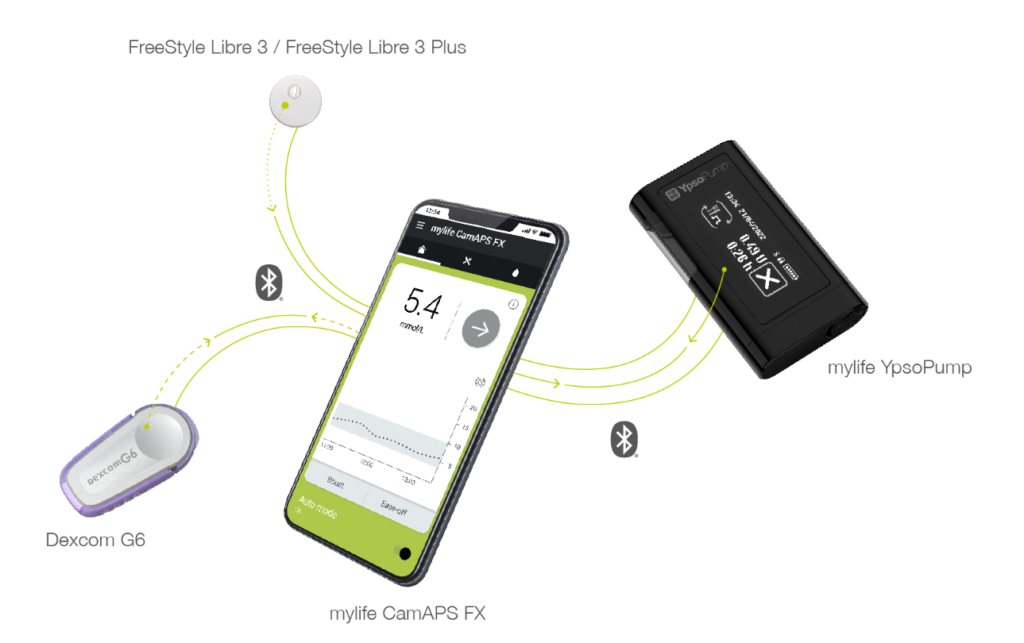
The Ypsomed comprises of:
- the YpsoPump
- mylife CamAPS FX mobile app
- the Dexcom G6 sensor
More information on the use of the Ypsomed can be found on the mylife website.
You can download the YpsoPump Explorer app, a virtual pump demo:
The Dexcom G6 is the continuous glucose monitoring sensor that works alongside the Ypsomed insulin pump to create a hybrid closed loop system. See the Dexcom website for more information on the use of the G6 sensor.
The mylife CamAPS FX app combined with the YpsoPump and the Dexcom G6 sensor creates the hybrid closed loop system. The Dexcom G6 sensor sends your glucose data to the app every five minutes, the app adjusts insulin delivery on the insulin pump every eight to twelve minutes to prevent low and high glucose levels.
Pregnancy
CamAPS FX is currently the only one indicated for use during pregnancy, as it can help manage glucose levels more effectively in pregnant women with type 1 diabetes.
The mylife website has more information.
Patch pumps
The patch pump available is the Omnipod 5 System. The Omnipod 5 is attached directly to the body and can be worn on the back of the arm, abdomen, back and the thigh. The Omnipod 5 has no extra tubing, which means it sits directly on your skin and is managed using the Omnipod 5 Controller.
To be eligible for the Omnipod 5, your total daily dose of insulin must be less than 65 units.
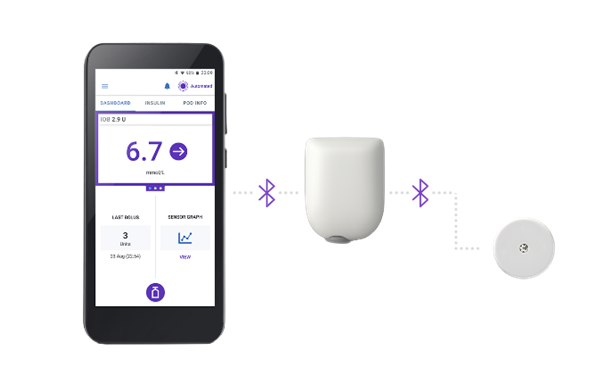
The Omnipod 5 system comprises three parts, the Omnipod 5 controller, the Pod and the Freestyle Libre 2 Plus sensor.
You can order a free Pod Experience Kit.
The Freestyle Libre 2 Plus is the continuous glucose monitoring sensor that works alongside the Omnipod 5 to create a hybrid closed loop system.
You can find Freestyle Libre 2 Plus sensor tutorials and manuals on the Freestyle website.
The Omnipod 5 pod receives the glucose reading from the Freestyle Libre 2 Plus sensor every five minutes, SmartAdjust technology within the Pod uses the glucose reading to automatically adjust insulin delivery. The Omnipod website has more information on SmartAdjust technology.